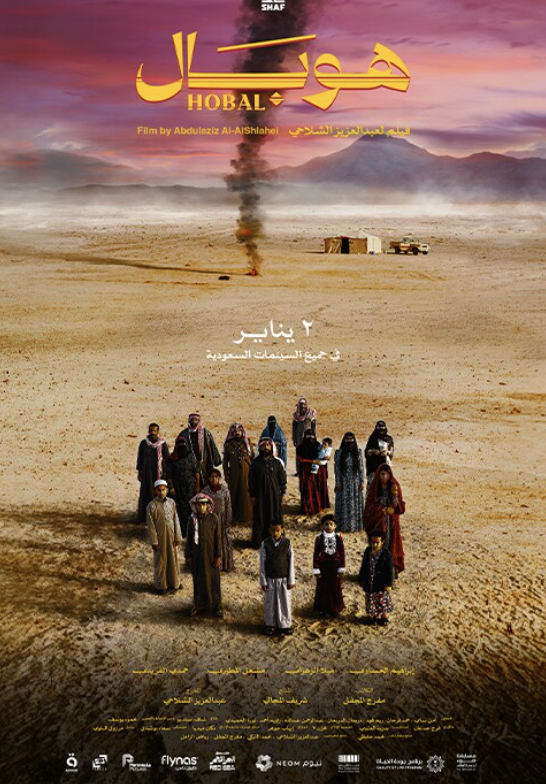
The Saudi film “Hobal” is one of the most notable recent cinematic works that has captured the attention of both audiences and critics, blending dramatic depth with striking cinematography while shedding light on important social and cultural issues.
The story is set during the Gulf War in 1990, when the grandfather, Liam (Ibrahim Al-Hassawi), decides to abandon city life and live with his family in the desert, believing that the end of the world is near. This decision sparks tension and conflict within the family, especially as some of the children rebel and wish to return to urban life. The film explores the impact of isolation and extreme thinking on family relationships, showing how fear of change can erode familial bonds.
Ibrahim Al-Hassawi delivers a standout performance as Liam, portraying a character that balances strictness and tenderness, particularly in his interactions with his grandchildren. Mishal Al-Mutairi and Mila Al-Zahrani also shine in their roles, adding depth to their characters and their internal struggles. Director Abdulaziz Al-Shalahi masterfully captures the beauty of the Saudi desert, using camera angles that reflect both the isolation and inner conflict of the characters. The musical score by Souad Beshnaq further enhances the dramatic atmosphere, adding an emotional layer to the narrative.
“Hobal” also delves into themes such as fear of the unknown, generational conflict, and the psychological effects of isolation. The film serves as a reflection of the challenges facing Saudi society in balancing tradition and modernity, and how ideological extremism can lead to isolation and the breakdown of human connections.
The film is meticulous in its depiction of Bedouin life and dialect, making it a valuable addition to Saudi, Gulf, and Arab cinema. It succeeds in presenting a compelling human story that reflects the internal struggles and conflicts individuals and communities may face. With strong performances and exceptional direction, “Hobal” delivers a cinematic experience worth watching and reflecting upon.
Rating: 8/10
About the Author